Buying a Glass-Door Drinks Fridge? Check These Details First
Two drinks fridges can look almost the same in a catalogue. Put them in a shop, though, and the differences become much easier to notice: one shelf won’t take your tall bottles, a door gets in the way, or restocking takes longer than you expected.
Before you compare prices, spend a little time on the details below. They’ll help you ask for a fridge that fits the way your shop actually works.
Start with your bottles, not just the litre figure
A capacity figure is useful, but it doesn’t show how your range will sit on the shelves. Water bottles, cans, juice cartons and larger bottles all take up space differently.
Make a short list of the products you sell most often, including their height and width. Then decide how many you want chilled and ready at the busiest part of the day. Ask for a shelf layout using those sizes, with the manufacturer’s required airflow gaps left clear.
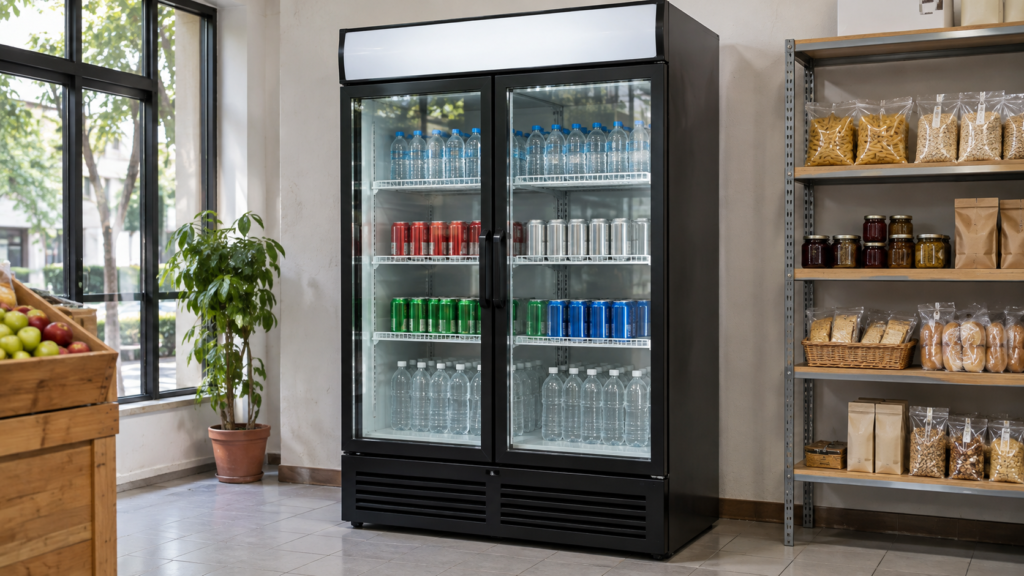
When reviewing an upright glass-door beverage display fridge, ask for usable shelf width and depth, adjustment positions and shelf load limits. A photo of the inside with measurements is more helpful than another exterior shot.
Check the doors against the aisle
Stand where the cabinet will go and imagine a customer opening it while someone else walks past. Include handles, nearby shelves and the space needed to reach the bottom shelf.
A sliding double-door drinks fridge is an option to compare when swing-door clearance is tight. Check how much of the cabinet is accessible with one door open, and how easily you can refill each side. The door arrangement needs to work for staff as well as customers.
If you’re considering hinged doors, confirm the opening direction and whether the exact configuration offered has a self-closing mechanism. Don’t rely on a general description that covers several models.
Tell the supplier what the shop is really like
Is the cabinet going into an air-conditioned convenience store, a warm café or a shop entrance that stays open all day? Send that information with the inquiry.
For a vertical glass-door beverage cooler, request the operating temperature range and the ambient conditions for which the quoted model is rated. If the room gets humid, ask what that means for glass visibility and whether the proposed unit has any relevant features.
Ask for the installation drawing, too. It should make the ventilation and service clearances clear. Leave those spaces in your plan instead of assuming the cabinet can sit flush against surrounding furniture.
Be specific about how you restock
There’s a difference between topping up a few chilled bottles and filling the cabinet with a large delivery at room temperature.
Tell the supplier which routine you expect, how often you restock and how frequently the doors will open. Ask what loading procedure they recommend for the selected model, and what performance information they can provide under comparable conditions. Avoid planning around a cooling time that hasn’t been confirmed.
Also decide where unopened cases will wait and who will refill the fridge during a busy shift. Those details can affect the space you need just as much as the cabinet dimensions.
Compare figures that mean the same thing
If energy use matters to your decision, ask for measured consumption and the conditions used to obtain it. Check that the figures you’re comparing cover comparable cabinet configurations and test conditions. The electrical rating alone is not a daily energy-use figure.
Put the other basics side by side: confirmed dimensions, electrical requirements, shelf quantity, temperature range, warranty terms and the parts included in the quotation. Ask how service will be handled at your destination and which replacement parts can be supplied.
Our commercial refrigeration supplier buying guide covers the wider supplier and shipping checks. For this purchase, keep a written specification for the exact cabinet you’ve chosen.
A short checklist before you place the order
- Will your actual bottle and can sizes fit the proposed shelf layout?
- Can customers open the doors without blocking the aisle?
- Has the supplier confirmed suitability for your room conditions and loading routine?
- Do the delivery route and final location allow enough space?
- Are the electrical details, included equipment and service terms written down?
Keep the model reference on the quotation, drawing and final order consistent. If a specification changes during discussion, ask for the documents to be updated before you approve the order.
Ready to narrow down the options? Send ICETRANS your bottle sizes and available floor space, along with a photo of the proposed location. It gives the team something concrete to work from and makes the next conversation much more useful.